
Top High Fiber Foods Ranked: Why Mycoprotein Is the Super-Fiber You're Missing
Published date: 09.12.2025
1. The “Fiber Gap”: Why You Are Likely Deficient
Here is a hard pill to swallow: 95% of people do not eat enough fiber.
We obsess over protein. We demonize carbs. But we completely ignore fiber. This nutrient is the unsung hero of weight loss, longevity, and steady energy. If you are constantly hungry, suffering from “brain fog,” or dealing with bloating, you likely don’t need more caffeine—you need high fiber foods.
But let’s be honest: nobody gets excited about eating a bowl of dry bran flakes.
The search for fiber usually leads to bland, chalky foods. But what if there was a source of fiber that also acted like a high-quality protein?
2. The Usual Suspects: Common High Fiber Foods
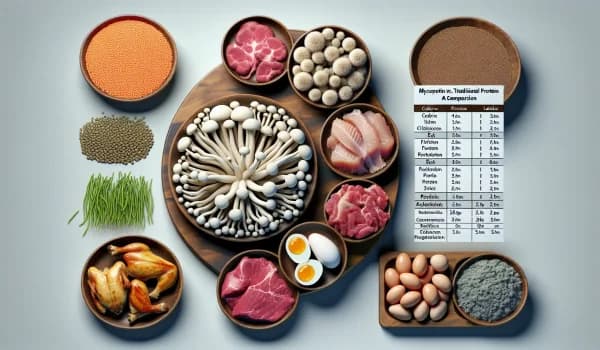
Before we reveal the superior option, let’s look at the traditional high fiber foods you have likely been told to eat. These are healthy, but they have limitations.
- Beans and Legumes (Lentils, Black Beans):
- The Good: High fiber (~7-8g per half-cup).
- The Bad: Can cause significant bloating (gas) and require long cooking times.
- Whole Grains (Oats, Brown Rice):
- The Good: Accessible and cheap.
- The Bad: High in carbohydrates (glycemic load) and often low in protein.
- Cruciferous Vegetables (Broccoli, Brussels Sprouts):
- The Good: Packed with vitamins.
- The Bad: You have to eat a massive volume (buckets of broccoli) to hit your daily fiber goals.
- Fruits (Apples, Berries):
- The Good: Delicious.
- The Bad: High in fructose (sugar).
The Problem: To get your recommended 30g of fiber a day, you often have to over-consume carbs or suffer through digestive discomfort.
3. The Game Changer: Mycoprotein (The Protein-Fiber Hybrid)
Enter mycoprotein.
While most people categorize foods as either “Protein” (meat/eggs) or “Fiber” (veg/grains), mycoprotein breaks the rules. Derived from the fermentation of Fusarium venenatum, it is a Protein-Fiber Matrix.
Why Mycoprotein is the “Super Fiber”
Unlike plant isolates or animal meat, the cell walls of mycoprotein are naturally rich in chitin and beta-glucans.
- Dual-Action Satiety:
- Standard high fiber foods keep you full by bulk. Mycoprotein keeps you full by bulk (fiber) AND by triggering satiety hormones (protein). It’s a double punch against hunger.
- Gut Microbiome Fuel:
- The specific type of fiber in mycoprotein is prebiotic. It ferments in the gut to produce Short-Chain Fatty Acids (SCFAs), which are crucial for reducing inflammation and boosting immunity.
- No “Carb Tax”:
- You get the fiber benefits of oats without the high carbohydrate load.
Expert Insight: “Mycoprotein is unique because it provides the texture of meat but the gut-health profile of a vegetable. It is the ultimate hybrid food.”
4. Data Showdown: Fiber Density Compared
Let’s look at the numbers. If you want to maximize fiber without spiking your blood sugar or eating 5 plates of food, which wins?
Food Source (per 100g)Fiber ContentProtein ContentNet CarbsThe VerdictMycoprotein~6.0g~11-15gLowBest for Satiety & Lean MuscleOats (Cooked)~1.7g~2.5gHighGood, but carb-heavyBroccoli (Raw)~2.6g~2.8gLowRequires high volume eatingChicken Breast0g~31g0gZero gut health benefitBrown Rice~1.8g~2.6gHighLow nutrient density
Analysis: Mycoprotein offers significantly more fiber than grains and vegetables by weight, while delivering protein levels comparable to eggs. It is the most efficient food on the list.
5. The Ultimate Hack: The High-Fiber Energy Bar
Knowing you need more fiber is one thing. Actually eating it during a busy workday is another.
Most commercial “fiber bars” are just candy bars with added inulin (chicory root), which often causes stomach upset. Most “protein bars” are devoid of fiber entirely.
This is where the Mycoprotein Energy Bar shines.
The “Functional Snacking” Evolution
By incorporating mycoprotein into an energy bar, you create a snack that solves the modern dietary dilemma:
- Texture: The fibrous hyphae of mycoprotein give the bar a satisfying, chewy texture without the grit of added fiber powders.
- Digestibility: Because it is a whole-food fiber source, it is often tolerated better than synthetic fiber additives.
- The 3 PM Rescue: Eating a high-fiber, high-protein bar stabilizes blood sugar. This prevents the insulin crash that usually sends you looking for donuts in the afternoon.
Pro Tip: If you are checking labels for high fiber foods, look for a bar that has at least 4g of fiber and 10g of protein. Mycoprotein bars naturally hit this “Golden Ratio.”
6. FAQs: Mastering Your Gut Health
Q: Can I count mycoprotein as one of my daily vegetable servings?
A: While it’s technically a fungi, nutritionally, it functions very similarly to a high-protein vegetable. It contributes to your daily fiber intake just like broccoli or beans would.
Q: What is the difference between soluble and insoluble fiber?
A: Soluble fiber absorbs water (good for cholesterol); insoluble fiber adds bulk (good for digestion). Mycoprotein contains both, making it a complete gut-health solution.
Q: Will increasing high fiber foods cause bloating?
A: Rapidly increasing fiber can cause gas. However, studies suggest that the fiber in mycoprotein is well-tolerated. We recommend starting with one mycoprotein energy bar or meal per day to let your microbiome adjust.
Q: Is mycoprotein suitable for a Low-FODMAP diet?
A: Generally, yes. Unlike many legumes (beans/lentils) which are high in FODMAPs and cause bloating, mycoprotein is often easier on sensitive stomachs.
Conclusion: Upgrade Your Fiber Strategy
Stop forcing yourself to eat bland bran muffins. The future of high fiber foods is fungal.
By integrating mycoprotein into your diet—whether through savory meals or a convenient energy bar—you are hitting two major health goals at once: high-quality protein for strength, and premium fiber for gut health.
Your gut is your second brain. Feed it the smart way.